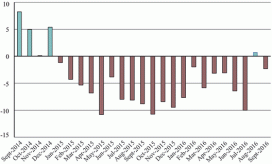


September 2016 North American Freight Numbers
September 2016 North American Freight Numbers
| Month | 2014 | 2015 | 2016 | Percent Change 2014-2015 | Percent Change 2015-2016 | |||||
|---|---|---|---|---|---|---|---|---|---|---|
| January | 90,326 | 89,258 | 82,430 | -1.2 | -7.7 | |||||
| February | 89,557 | 85,723 | 84,038 | -4.3 | -2.0 | |||||
| March | 101,478 | 96,070 | 90,462 | -5.3 | -5.8 | |||||
| April | 100,141 | 93,327 | 90,380 | -6.8 | -3.2 | |||||
| May | 103,942 | 92,707 | 89,840 | -10.8 | -3.1 | |||||
| June | 102,978 | 99,030 | 92,671 | -3.8 | -6.4 | |||||
| July | 101,075 | 92,995 | 83,725 | -8.0 | -10.0 | |||||
| August | 100,624 | 92,442 | 93,126 | -8.1 | 0.7 | |||||
| September | 102,245 | 93,246 | 91,126 | -8.8 | -2.3 | |||||
| October | 108,243 | 96,624 | -10.7 | |||||||
| November | 96,252 | 88,154 | -8.4 | |||||||
| December | 95,811 | 86,748 | -9.5 | |||||||
| Year-to-date | 892,366 | 834,799 | 797,798 | -6.5 | -4.4 | |||||
| Annual | 1,192,671 | 1,106,325 | -7.2 |
Note: Values in millions of dollars. Numbers might not add to totals due to rounding. Percent change based on numbers prior to rounding.
Source: Bureau of Transportation Statistics, TransBorder Freight Data,
Two transportation modes – rail and air – carried more U.S. freight by value with North American Free Trade Agreement (NAFTA) partners Canada and Mexico in September 2016 compared to September 2015 as total freight on all modes decreased 2.3 percent to $91.1 billion in current dollars, according to the TransBorder Freight Data released today by the U.S. Department of Transportation’s Bureau of Transportation Statistics (BTS).
The total value of cross-border freight has declined from the same month of the previous year in 20 of the past 21 months beginning in January 2015 with only an increase of 0.7 percent in August 2016.
Percent Change in Value of U.S.-NAFTA Freight Flows by Mode: September 2015-2016
| Mode | September 2015 | September 2016 | Percent Change September 2015-2016 | |
|---|---|---|---|---|
| All Modes | Imports | 50,497 | 48,755 | -3.4 |
| Exports | 42,750 | 42,371 | -0.9 | |
| Total | 93,246 | 91,126 | -2.3 | |
| All Surface Modes | Imports | 44,473 | 43,160 | -3.0 |
| Exports | 34,965 | 34,785 | -0.5 | |
| Total | 79,438 | 77,946 | -1.9 | |
| Truck | Imports | 31,705 | 30,100 | -5.1 |
| Exports | 29,580 | 28,865 | -2.4 | |
| Total | 61,285 | 58,965 | -3.8 | |
| Rail | Imports | 8,857 | 9,545 | 7.8 |
| Exports | 4,570 | 4,953 | 8.4 | |
| Total | 13,427 | 14,498 | 8.0 | |
| Pipeline | Imports | 3,912 | 3,515 | -10.1 |
| Exports | 815 | 967 | 18.7 | |
| Total | 4,726 | 4,482 | -5.2 | |
| Vessel | Imports | 2,678 | 2,414 | -9.8 |
| Exports | 2,581 | 2,487 | -3.6 | |
| Total | 5,258 | 4,901 | -6.8 | |
| Air | Imports | 1,604 | 1,646 | 2.7 |
| Exports | 2,047 | 2,127 | 3.9 | |
| Total | 3,651 | 3,773 | 3.4 |
Notes: Values in millions of current dollars. Numbers might not add to totals due to rounding. Percent changes based on numbers prior to rounding. The value of trade for all modes is not equal to the sum of truck, rail, pipeline, vessel and air modes, it also includes shipments made by mail, foreign trade zones, and other transportation. For additional detail, please refer to the TransBorder web page.
Source: Bureau of Transportation Statistics, TransBorder Freight Data
The value of commodities moving by rail and air increased 8.0 percent and 3.4 percent respectively, while the value of freight carried on other modes decreased: truck, 3.8 percent; pipeline, 5.2 percent and vessel, 6.8 percent.
Trucks carried 64.7 percent of U.S.-NAFTA freight and continued to be the most heavily utilized mode for moving goods to and from both U.S.-NAFTA partners. Trucks accounted for $30.1 billion of the $48.8 billion of imports (61.7 percent) and $28.9 billion of the $42.4 billion of exports (68.1 percent).
Rail remained the second largest mode by value, moving 15.9 percent of all U.S.-NAFTA freight, followed by vessel, 5.4 percent; pipeline, 4.9 percent; and air, 4.1 percent. The surface transportation modes of truck, rail and pipeline carried 85.5 percent of the total value of U.S.-NAFTA freight flows.
U.S.-Canada Freight
Percent Change in Value of U.S.-Canada Freight Flows by Mode: September 2015-2016
| Mode | Percent Change |
|---|---|
| Truck | -3.5 |
| Rail | 3.9 |
| Pipeline | -6.5 |
| Vessel | -30.3 |
| Air | -0.7 |
| All Modes | -4.4 |
Bureau of Transportation Statistics, TransBorder Freight Data, https://data.bts.gov/stories/s/TransBorder-Freight-Data/myhq-rm6q/
From September 2015 to September 2016, the value of U.S.-Canada freight flows fell 4.4 percent to $46.2 billion mainly due to decreases in the value of goods moved by vessel and pipeline. All modes of transportation except rail carried a lower value of U.S.-Canada freight than a year earlier (Figure 3, Table 3).
Trucks carried 59.6 percent of the value of the freight to and from Canada. Rail carried 16.4 percent followed by pipeline, 9.0 percent; air, 5.1 percent; and vessel, 2.9 percent. The surface transportation modes of truck, rail and pipeline carried 85.0 percent of the value of total U.S.-Canada freight flows (Table 3).
U.S.-Mexico Freight
Percent Change in Value of U.S.-Mexico Freight Flows by Mode: September 2015-2016
| Mode | Percent Change |
|---|---|
| Truck | -4.0 |
| Rail | 12.9 |
| Pipeline | 15.3 |
| Vessel | 7.1 |
| Air | 10.9 |
| All Modes | 0.0 |
Bureau of Transportation Statistics, TransBorder Freight Data, https://data.bts.gov/stories/s/TransBorder-Freight-Data/myhq-rm6q/
From September 2015 to September 2016, the value of U.S.-Mexico freight decreased 0.04 percent to $44.9 billion despite four modes of transportation – pipeline, rail, air, and vessel – carrying a higher value of U.S.-Mexico freight than a year earlier. Truck, which accounts for 69.9 percent of the value of freight to and from Mexico, was down 4.0 percent. Freight carried by pipeline increased by 15.3 percent, rail by 12.9 percent, air by 10.9 percent, and vessel by 7.1 percent.
Rail carried 15.4 percent of the value of freight to and from Mexico followed by vessel, 7.9 percent; air, 3.1 percent; and pipeline, 0.8 percent. The surface transportation modes of truck, rail and pipeline carried 86.1 percent of the value of total U.S.-Mexico freight flows.
Commodities
In September 2016, the top commodity category transported between the U.S. and Canada by all modes was vehicles and parts, of which $5.2 billion, or 55.9 percent, moved by truck and $3.9 billion, or 41.8 percent, moved by rail. The top commodity category transported between the U.S. and Mexico by all modes in September 2016 was electrical machinery, of which $7.4 billion, or 81.8 percent, moved by truck.
Reporting Notes
BTS press releases and the BTS website define surface transportation modes as truck, rail and pipeline. See North American TransBorder Freight Data on the BTS website for additional data for surface modes since 1995 and all modes since 2004. The category of all modes of transportation cited in the following tables includes freight movements by truck, rail, vessel, pipeline, air, other and unknown modes of transport.
Data in this press release are not seasonally adjusted and are not adjusted for inflation. Additional summary data adjusted for inflation and exchange rates can be found on the BTS website under TransBorder Indexed Freight Flow Data. The BLS indexes used in the adjustments for inflation and exchange rates might be revised in each of the three months after original publication. For previous press releases and summary tables, see TransBorder Press Releases. See TransBorder Freight Data for data from previous months, and for additional state, port, and commodity data. BTS has scheduled the release of October TransBorder numbers for Jan. 5.
Value Of Monthly U.S.-NAFTA Freight Flows (Sept. 2016)
| Month | 2014 | 2015 | 2016 | Percent Change 2014-2015 | Percent Change 2015-2016 |
|---|---|---|---|---|---|
| January | 90,326 | 89,258 | 82,430 | -1.2 | -7.7 |
| February | 89,557 | 85,723 | 84,038 | -4.3 | -2.0 |
| March | 101,478 | 96,070 | 90,462 | -5.3 | -5.8 |
| April | 100,141 | 93,327 | 90,380 | -6.8 | -3.2 |
| May | 103,942 | 92,707 | 89,840 | -10.8 | -3.1 |
| June | 102,978 | 99,030 | 92,671 | -3.8 | -6.4 |
| July | 101,075 | 92,995 | 83,725 | -8.0 | -10.0 |
| August | 100,624 | 92,442 | 93,126 | -8.1 | 0.7 |
| September | 102,245 | 93,246 | 91,126 | -8.8 | -2.3 |
| October | 108,243 | 96,624 | -10.7 | ||
| November | 96,252 | 88,154 | -8.4 | ||
| December | 95,811 | 86,748 | -9.5 | ||
| Year-to-date | 892,366 | 834,799 | 797,798 | -6.5 | -4.4 |
| Annual | 1,192,671 | 1,106,325 | -7.2 |
Numbers might not add to totals due to rounding. Percent change based on numbers prior to rounding.
Bureau of Transportation Statistics, TransBorder Freight Data, https://data.bts.gov/stories/s/TransBorder-Freight-Data/myhq-rm6q/
Value Of Monthly U.S.-NAFTA Freight Flows By Mode Of Transportation (Sept. 2016)
| Mode | September 2015 | September 2016 | Percent Change September 2015-2016 | |
|---|---|---|---|---|
| All Modes | Imports | 50,497 | 48,755 | -3.4 |
| Exports | 42,750 | 42,371 | -0.9 | |
| Total | 93,246 | 91,126 | -2.3 | |
| All Surface Modes | Imports | 44,473 | 43,160 | -3.0 |
| Exports | 34,965 | 34,785 | -0.5 | |
| Total | 79,438 | 77,946 | -1.9 | |
| Truck | Imports | 31,705 | 30,100 | -5.1 |
| Exports | 29,580 | 28,865 | -2.4 | |
| Total | 61,285 | 58,965 | -3.8 | |
| Rail | Imports | 8,857 | 9,545 | 7.8 |
| Exports | 4,570 | 4,953 | 8.4 | |
| Total | 13,427 | 14,498 | 8.0 | |
| Pipeline | Imports | 3,912 | 3,515 | -10.1 |
| Exports | 815 | 967 | 18.7 | |
| Total | 4,726 | 4,482 | -5.2 | |
| Vessel | Imports | 2,678 | 2,414 | -9.8 |
| Exports | 2,581 | 2,487 | -3.6 | |
| Total | 5,258 | 4,901 | -6.8 | |
| Air | Imports | 1,604 | 1,646 | 2.7 |
| Exports | 2,047 | 2,127 | 3.9 | |
| Total | 3,651 | 3,773 | 3.4 | |
Numbers might not add to totals due to rounding. Percent changes based on numbers prior to rounding. The value of trade for all modes is not equal to the sum of truck, rail, pipeline, vessel and air modes, it also includes shipments made by mail, foreign trade zones, and other transportation. For additional detail, please refer to the TransBorder web page: https://data.bts.gov/stories/s/TransBorder-Freight-Data/myhq-rm6q/
Bureau of Transportation Statistics, TransBorder Freight Data, https://data.bts.gov/stories/s/TransBorder-Freight-Data/myhq-rm6q/
Value Of Monthly U.S.-Canada Freight Flows By Mode Of Transportation (Sept. 2016)
| Mode | September 2015 | September 2016 | Percent Change September 2015-2016 | |
|---|---|---|---|---|
| All Modes | Imports | 25,140 | 23,666 | -5.9 |
| Exports | 23,155 | 22,525 | -2.7 | |
| Total | 48,295 | 46,191 | -4.4 | |
| All Surface Modes | Imports | 21,813 | 20,899 | -4.2 |
| Exports | 18,460 | 18,366 | -0.5 | |
| Total | 40,273 | 39,265 | -2.5 | |
| Truck | Imports | 12,884 | 12,376 | -3.9 |
| Exports | 15,663 | 15,171 | -3.1 | |
| Total | 28,547 | 27,547 | -3.5 | |
| Rail | Imports | 5,037 | 5,024 | -0.2 |
| Exports | 2,257 | 2,551 | 13.0 | |
| Total | 7,293 | 7,575 | 3.9 | |
| Pipeline | Imports | 3,892 | 3,499 | -10.1 |
| Exports | 540 | 644 | 19.3 | |
| Total | 4,432 | 4,143 | -6.5 | |
| Vessel | Imports | 1,068 | 834 | -21.9 |
| Exports | 884 | 527 | -40.4 | |
| Total | 1,952 | 1,361 | -30.3 | |
| Air | Imports | 1,048 | 1,010 | -3.5 |
| Exports | 1,334 | 1,355 | 1.6 | |
| Total | 2,382 | 2,365 | -0.7 | |
Numbers might not add to totals due to rounding. Percent changes based on numbers prior to rounding. The value of trade for all modes is not equal to the sum of truck, rail, pipeline, vessel and air modes, it also includes shipments made by mail, foreign trade zones, and other transportation. For additional detail, please refer to the TransBorder web page.
Bureau of Transportation Statistics, TransBorder Freight Data
Top Commodity Transported between the U.S. and Canada for Each Mode of Transportation, September 2016
| Mode | Commodities | Exports | Imports | Total |
|---|---|---|---|---|
| All Modes | Vehicles and Parts | 4.2 | 5.1 | 9.3 |
| Truck | Vehicles and Parts | 2.6 | 2.6 | 5.2 |
| Rail | Vehicles and Parts | 1.4 | 2.5 | 3.9 |
| Pipeline | Mineral Fuels | 0.6 | 3.5 | 4.1 |
| Vessel | Mineral Fuels | 0.3 | 0.6 | 0.9 |
| Air | Electrical Machinery | 0.3 | 0.2 | 0.4 |
Import and export numbers might not add to totals due to rounding.
Bureau of Transportation Statistics, TransBorder Freight Data
Value Of Monthly U.S.-MEXICO Freight Flows By Mode Of Transportation (Sept. 2016)
| Mode | September 2015 | September 2016 | Percent Change September 2015-2016 | |
|---|---|---|---|---|
| All Modes | Imports | 25,356 | 25,089 | -1.1 |
| Exports | 19,595 | 19,846 | 1.3 | |
| Total | 44,951 | 44,935 | -0.04 | |
| All Surface Modes | Imports | 22,661 | 22,261 | -1.8 |
| Exports | 16,505 | 16,419 | -0.5 | |
| Total | 39,165 | 38,681 | -1.2 | |
| Truck | Imports | 18,821 | 17,724 | -5.8 |
| Exports | 13,917 | 13,694 | -1.6 | |
| Total | 32,737 | 31,418 | -4.0 | |
| Rail | Imports | 3,821 | 4,521 | 18.3 |
| Exports | 2,313 | 2,402 | 3.8 | |
| Total | 6,134 | 6,923 | 12.9 | |
| Pipeline | Imports | 19 | 16 | -15.5 |
| Exports | 275 | 323 | 17.5 | |
| Total | 294 | 339 | 15.3 | |
| Vessel | Imports | 1,610 | 1,580 | -1.9 |
| Exports | 1,697 | 1,960 | 15.5 | |
| Total | 3,306 | 3,540 | 7.1 | |
| Air | Imports | 556 | 636 | 14.3 |
| Exports | 713 | 772 | 8.3 | |
| Total | 1,269 | 1,408 | 10.9 | |
Numbers might not add to totals due to rounding. Percent changes based on numbers prior to rounding. The value of trade for all modes is not equal to the sum of truck, rail, pipeline, vessel and air modes, it also includes shipments made by mail, foreign trade zones, and other transportation. For additional detail, please refer to the TransBorder web page: https://data.bts.gov/stories/s/TransBorder-Freight-Data/myhq-rm6q/
Bureau of Transportation Statistics, TransBorder Freight Data, https://data.bts.gov/stories/s/TransBorder-Freight-Data/myhq-rm6q/
Top Commodity Transported between the U.S. and Mexico for Each Mode of Transportation, September 2016
| Mode | Commodities | Exports | Imports | Total |
|---|---|---|---|---|
| All Modes | Electrical Machinery | 3.6 | 5.5 | 9.1 |
| Truck | Electrical Machinery | 2.9 | 4.5 | 7.4 |
| Rail | Vehicles and Parts | 0.4 | 3.0 | 3.5 |
| Pipeline | Mineral Fuels | 0.3 | 0.0 | 0.3 |
| Vessel | Mineral Fuels | 1.2 | 0.8 | 2.0 |
| Air | Electrical Machinery | 0.3 | 0.2 | 0.4 |
Numbers might not add to totals due to rounding.
Bureau of Transportation Statistics, TransBorder Freight Data, https://data.bts.gov/stories/s/TransBorder-Freight-Data/myhq-rm6q/